
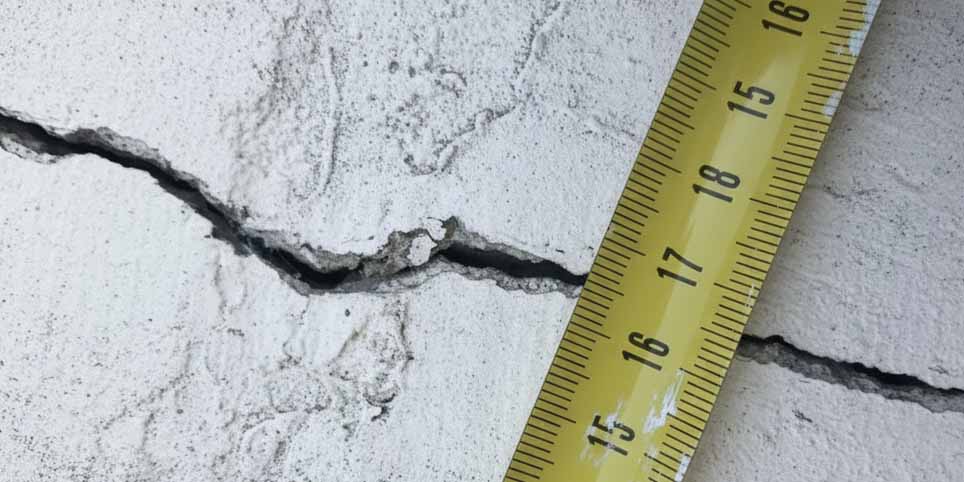
Why is my house cracking?
Cracks result from stresses on building materials when the soil under the foundations deforms. In the case of clay shrink-swell subsidence, water variations in the soil cause differential movement: some parts of the building rise or sink, creating tension that translates into cracks on walls, facades or partitions.
From a mechanical standpoint, cracks appear when tensile or shear stresses exceed the material's resistance. On clay soil, three main scenarios occur:
- •Differential shrinkage: during dry periods, the soil under part of the house shrinks more than elsewhere (for example near a tree), causing localized subsidence
- •Uneven swelling: after re-wetting, some areas swell more than others, causing partial uplift
- •Repeated cycle: the alternation of these movements gradually weakens the structure, widening existing cracks
Available studies on damage in clay areas indicate that nearly 60% of cracks observed on single-family homes are linked to RGA, compared to 25% for construction defects and 15% for other causes (natural settlement, thermal expansion).
Note: Cracks linked to RGA generally appear in late summer or early autumn, after a prolonged drought. They may stabilize temporarily in winter but often resume their progression in the next cycle.
How to tell a benign crack from structural damage?
Not all cracks require immediate action. Superficial micro-cracks (less than 0.2 mm wide) are generally benign and linked to normal plaster shrinkage. Structural cracks, on the other hand, go through the full thickness of the wall, exceed 2 mm in width, and evolve with the seasons. Their location, orientation and progression are the key criteria for assessing severity.
The table below, inspired by the recommendations of the Agence Qualité Construction (AQC), summarizes the main types of cracks [2]:
| Crack type | Width | Severity | Probable causes |
|---|---|---|---|
| Micro-crack | < 0.2 mm | Low | Plaster shrinkage, thermal variations |
| Fine crack | 0.2 to 2 mm | Moderate | Limited ground movement, local settlement |
| Through-crack | > 2 mm | Significant | Differential ground movement, RGA, foundation defect |
| Large crack | > 5 mm | Critical | Major movement, structural risk |
Visualizing crack types
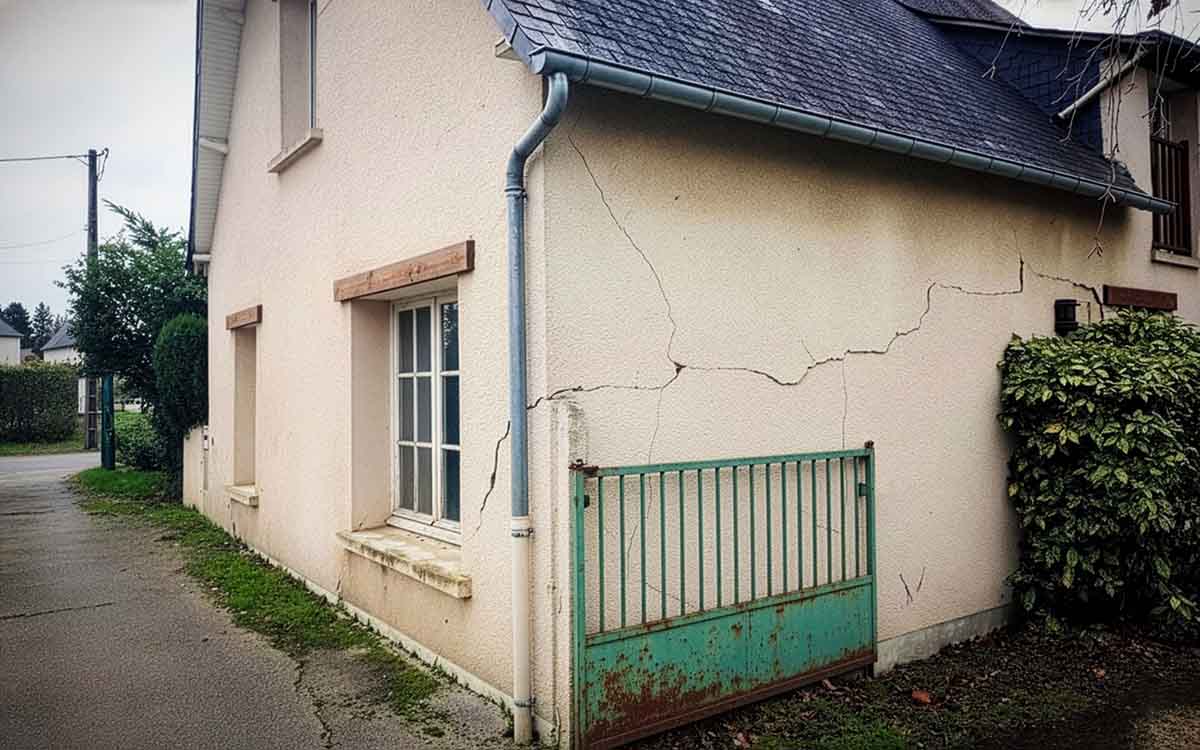
Through-crack
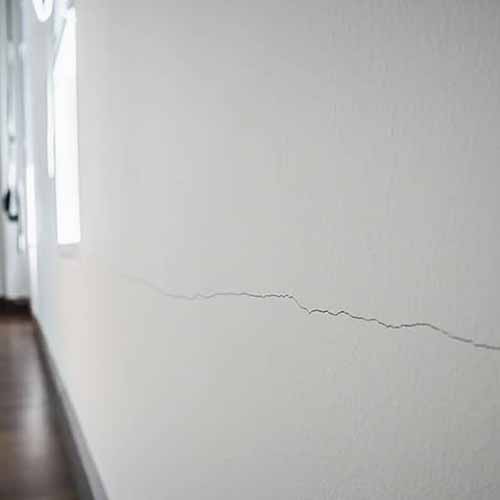
Fine crack
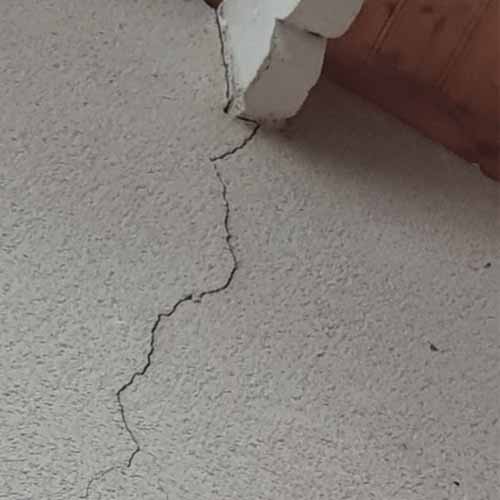
Large crack
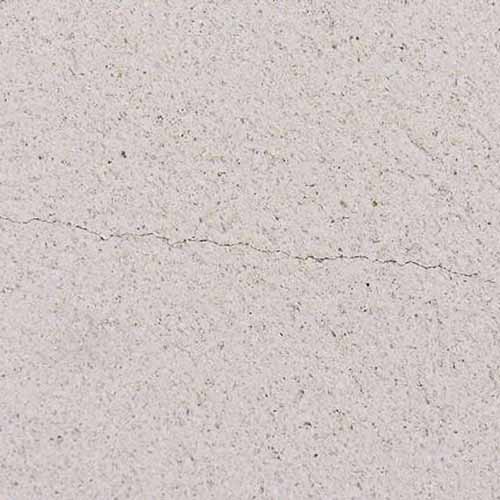
Micro-crack
In practice, several criteria help assess severity:
- •Width: measure with a crack gauge or a simple ruler
- •Depth: a through-crack (visible on both sides of the wall) is more concerning
- •Progression: install plaster or glass tell-tales to track opening over time
- •Location: cracks on facades, at the corners of openings (doors, windows), or stepping along brick joints
Warning signs: If cracks are accompanied by doors or windows that are hard to open, visible deformation of the floor or ceilings, or plaster detaching, it's recommended to consult a building expert quickly.
Do cracks always come back after summer?
Yes, in the case of RGA, cracks tend to reappear or grow after each drought period. The seasonal cycle imposes repeated stress on the structure: summer shrinkage, slight autumn swelling, winter stabilization. Without treating the underlying cause (soil water variation), the damage persists and gradually worsens over the years.
This cyclical nature distinguishes RGA-related cracks from cracks caused by a one-off settlement (which stabilize after a few months) or a construction defect (which generally appear within the first two years).
Measurements taken at various sites exposed to shrink-swell show that, in high-hazard zones, the soil can deform by several millimeters to a few centimeters each year depending on weather and depth. Over time, these repeated movements progressively widen cracks, which can go from simple surface marks to genuine structural fissures if no repair is carried out.
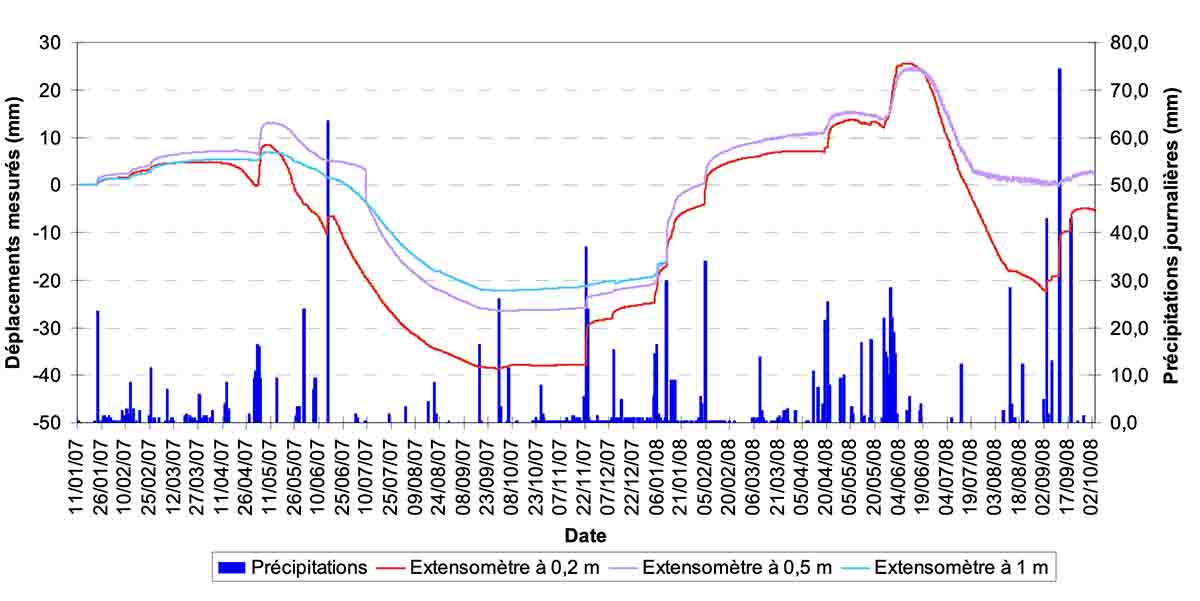
Cosmetic repair alone (filling, plastering) is therefore not enough. It's necessary to stabilize the underlying soil or adapt the foundations to interrupt the degradation cycle.
What additional visual signs should be watched?
Beyond visible cracks, several clues reveal ground movement: baseboards detaching, spider-web-shaped ceiling cracks, floor slab subsidence, doors or windows warping, or stepped cracks following masonry joints. These symptoms, taken together, reinforce the hypothesis of differential movement linked to RGA.
Building pathology experts use a systematic observation grid:
- Facades and exterior walls: vertical cracks at corners, horizontal cracks at the base (uplift), stepped diagonal cracks
- Openings: lintel deformation, gap between frame and wall, difficulty opening or closing
- Interior: ceiling cracks, wall covering detachment, tile subsidence
- Foundation and crawl space: cracks in foundation walls, water infiltration, moisture traces
The simultaneous presence of several of these signs justifies an in-depth RGA diagnosis including a geotechnical soil study and a structural assessment of the building.
Should cracks be repaired immediately or should you wait?
The answer depends on severity and progression. For superficial micro-cracks, monitoring is generally enough. For active structural cracks, it's recommended to act without waiting for them to worsen. However, any repair should be preceded by a diagnosis to identify and treat the cause: filling a crack without stabilizing the soil only masks the symptom without solving the problem.
The steps recommended by geotechnical experts are as follows:
- Observe and document: photograph, measure, install tell-tales
- Assess progression over at least one full seasonal cycle (6 to 12 months)
- Carry out a geotechnical diagnosis if the cracks are progressing or exceed 2 mm
- Implement a suitable solution: soil stabilization, underpinning, drainage
- Repair the cracks once the cause has been treated, using flexible materials able to absorb slight residual movement
Prematurely filling an active crack can give a false impression of resolution, but the underlying stress persists and will show up elsewhere or reopen the same crack.
Hydro-stabilization to slow crack progression
For early-stage cracks (less than 2-3 mm wide) on clay soils, an emerging approach is to stabilize soil moisture to interrupt the shrink-swell cycle. Hydro-stabilization, based on unsaturated soil mechanics principles, keeps the soil within a stable moisture variation range (±3%), thereby limiting the movement that causes cracks to widen.
This method applies to specific cases:
- •Progressing fine cracks (0.2 to 2 mm): in the early stage, before damage becomes major and structural
- •Moderately to highly clay-rich soils: medium-to-high hazard zones where water variations are the main cause
- •Shallow foundations: homes with strip footings or pad foundations, the most sensitive to ground movement
- •Alternative or complement: when micropiles are too costly or impossible (access, budget)
Experiments at test sites (2019-2022) show that maintaining stable moisture stabilizes 78% of existing cracks and reduces the amplitude of future ground movement by 90%. This approach doesn't replace crack repair but treats the cause of their progression.
TerraStab offers an automated water regulation system based on buried sensors, a predictive model, and subsurface irrigation. The goal: keep the soil stable to prevent cracks from worsening over seasonal cycles. Indicative cost: €4,000 to €8,000 for a 100-150 sqm home, 3 to 6 times less than underpinning. This solution is aimed at homeowners looking for a non-invasive alternative to heavy works, particularly suited to early-stage damage.
Hydro-stabilization isn't suited to every case: for large cracks (> 5 mm), significant subsidence, or very degraded older buildings, mechanical solutions (micropiles, underpinning) often remain necessary. Assessment by a geotechnical expert helps determine the most suitable approach based on the extent of damage and the site context.
Check your RGA risk
Find out if your home is exposed to clay shrink-swell subsidence and receive personalized recommendations.
Frequently asked questions
Should I worry about a vertical crack?
It depends on its width, depth and progression. A fine, stable vertical crack can be benign. On the other hand, a progressing vertical crack located at a wall corner or near an opening may signal differential ground movement. Install a tell-tale and monitor its progression over several months.
Discover diagnostic methodsDo interior and exterior cracks have the same cause?
Not always. Interior cracks can result from partition shrinkage, thermal variations or ground movement. Exterior through-cracks are more often linked to RGA or foundation defects. If both types appear simultaneously, this reinforces the hypothesis of structural movement. A diagnosis confirms the origin.
Can trees worsen cracks?
Yes. Tree roots, especially species with extensive root systems (oaks, poplars, willows), draw water from the soil during dry periods, increasing clay shrinkage within a radius that can reach 1.5 times the tree's height. The recommended minimum distance between a tree and a building is generally equal to the tree's mature height [4].
Can a crack close on its own?
Partially, yes. When the soil re-wets (autumn, winter), swelling can reduce the opening of a crack that appeared in summer. However, the structural stress remains, and the crack will reopen in the next cycle. This cyclical behavior is characteristic of RGA and doesn't constitute a spontaneous resolution of the problem.
When should you contact a building expert?
As soon as cracks exceed 2 mm in width, progress quickly (more than 1 mm within a few months), go through the wall, or are accompanied by deformation (doors, windows, floor). An expert can carry out a pathology assessment and point you toward suitable solutions.
Understand stabilization optionsIn summary
Cracks in walls are visible signs of often invisible stress. On clay soils, they generally reveal differential ground movement linked to shrink-swell subsidence. Observing, measuring and documenting their progression helps distinguish benign issues from structural damage. Any lasting repair starts with a diagnosis of the cause, not a simple cosmetic patch.
References
[1] Pathologies linked to clay shrink-swell subsidence: identification and solutions. Technical guide, 2019.
[2] AQC – Agence Qualité Construction (2018). Cracks in single-family homes: diagnosis and prevention. Building Pathology Collection. https://qualiteconstruction.com
[3] Monitoring of test sites in high shrink-swell hazard zones. Applied geotechnical studies, 2021. georisques.gouv.fr
[4] DTU 13.1 (2019). Shallow foundations: design recommendations in clay zones. NF P11-211 standard. AFNOR. https://www.afnor.org