
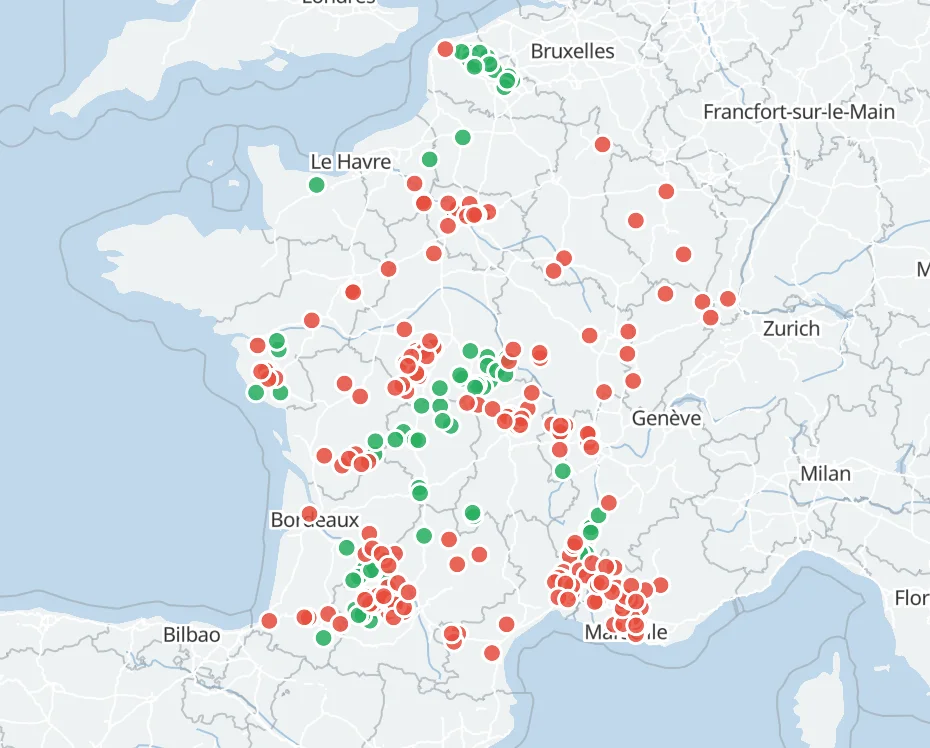
Key figures from March 13, 2026
39 municipalities recognized: natural disaster status granted. 212 municipalities denied: applications not meeting the criteria. 84% denial rate, consistent with previous orders.
Cumulative figures: combining the February 27, 2026 order (72 recognized, 184 denied) with that of March 13, 2026, the total reaches 111 municipalities recognized and 396 municipalities denied — 507 decisions in total since the start of 2026.
Why does the denial rate remain so high?
The March 13, 2026 order confirms a trend: 84% of Cat-Nat recognition applications are denied. This is not a new phenomenon, but it has intensified since the 2024 ministerial circular.
The main reason? The strict meteorological criteria set by the government: the soil moisture index must show a return period of more than 10 years — a 'moderate' or 'fairly significant' drought is not enough. This means a municipality must experience a statistically rare climate event to be recognized — not simply be exposed to RGA hazard on the official Géorisques map.
Concrete impact: A homeowner in a denied municipality will be deprived of their natural disaster insurance guarantee for RGA damage — even if their home is built on exposed clay soil.
Departments most affected by this order
On March 13, 2026, several regions concentrate the denials. Here are the main areas:
Hérault (34): 55 municipalities denied. This is the department with the highest concentration of denials in this order. Drought in the Mediterranean region, although frequent, does not meet the thresholds.
Vienne (86) and Saône-et-Loire (71): ~42 municipalities denied in Vienne, 22 in Saône-et-Loire. These departments in the Centre-Ouest and Burgundy regions show significant RGA hazard on the official Géorisques map, but weather conditions do not meet the regulatory criteria.
Puy-de-Dôme (63): 15 municipalities denied. Auvergne is a region where RGA hazard is well documented, but the soil moisture index does not show the required return period.
Essonne (91) and Île-de-France: 10 municipalities denied in Essonne. Despite strong RGA exposure in Île-de-France, applications from the region run into the same moisture-index criteria.
Gironde (33), Deux-Sèvres (79) and Calvados (14): Gironde: 15 recognized, 16 denied • Deux-Sèvres: 7 recognized, 2 denied • Calvados: 4 recognized. These areas show more mixed outcomes, with some municipalities crossing the meteorological threshold and others not.
What does a Cat-Nat denial actually mean?
Many homeowners mistakenly believe that a Cat-Nat denial means their municipality is 'not at RGA risk'. This is a common and dangerous misunderstanding.
A denial does NOT mean that RGA doesn't exist in the municipality. The Géorisques RGA hazard map remains the geotechnical reference. Many municipalities denied in 2026 are classified as medium or high hazard.
A denial means that the specific climate event of the period did not meet the moisture-index criteria (return period of more than 10 years). It's a question of drought severity, not of whether the risk exists.
Consequence for insurance: In a denied municipality, RGA damage is not covered by the natural disaster guarantee. The homeowner bears the cost.
Key point: A Cat-Nat denial does not exempt you from prevention. On the contrary, it makes prevention more urgent — because you cannot count on insurance in the event of a claim.
Comparison with the previous order (February 27, 2026)
The February 27, 2026 order had recognized 72 municipalities and denied 184. The March 13 order adds 39 recognized and 212 denied, confirming the trend: February 27, 2026 — 72 recognized, 184 denied. March 13, 2026 — 39 recognized, 212 denied.
Total since February: 111 municipalities recognized, 396 denied. The denial rate remains around 78-84%, reflecting the strict application of the 2024 criteria.
If your municipality is denied, what should you do?
Even without Cat-Nat recognition, you are not without options:
1. Check your actual RGA exposure. Consult the RGA hazard map on Géorisques for your municipality and address. A Cat-Nat denial does not invalidate the official hazard map.
2. Contact your insurer. Ask what your policy covers. Some home insurance contracts include additional guarantees for structural RGA damage (outside Cat-Nat).
3. Adopt a preventive solution. Soil water stabilization (regulating moisture around the foundations) is the best insurance against future damage. Affordable (far below underpinning or micropiles), it allows you to act before structural damage makes prevention impossible.
4. Administrative appeal. Your municipality or groups of homeowners can challenge the order before the administrative court within 2 months of its publication.
Insurance alone remains insufficient without prevention
Even with Cat-Nat recognition, insurance compensation only covers damage after the recognition date. Prior cracks or progressive damage remain your responsibility.
The real solution? Stop shrink-swell cycles before they cause damage.
TerraStab offers a system of connected sensors and underground irrigation that maintains a stable water content in the clay soil around your foundations. This system neutralizes shrink-swell movement without heavy works, without micropiles.
Protect your home before the next claim
Whether your municipality is recognized or denied for Cat-Nat, the RGA risk exists. Discover how a preventive solution can save you repair costs.