
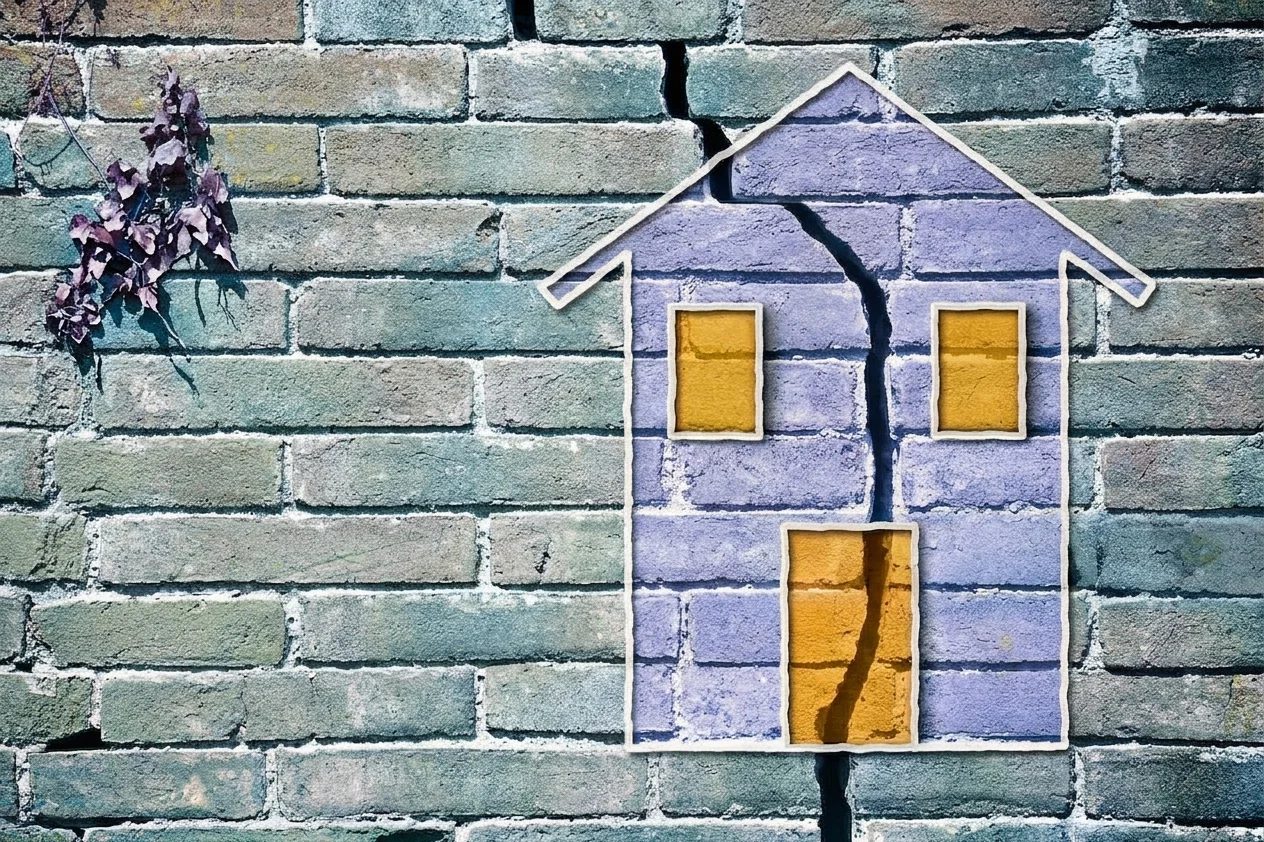
1. Stair-step cracks on exterior walls
Cracks that follow the masonry joints in a stair-step (diagonal zigzag) pattern are one of the most characteristic signs of RGA. They usually appear at wall corners, where differential ground movement is greatest.
A stair-step crack under 2 mm is often harmless. Beyond 3–5 mm, or if it widens between two observations, a professional assessment is needed. Watch how it evolves between summer (drought) and winter (rain).
2. Diagonal cracks at the corners of openings
Diagonal cracks starting from the corners of windows, doors, or bay windows are very revealing of differential foundation movement. These areas are natural structural weak points: when the ground moves, they give way first.
This type of crack may seem minor at first (1–2 mm). But if it goes through the full thickness of the wall and spreads over more than 20–30 cm, the structure is already compromised. Several such cracks accumulating is a strong warning signal.
3. Doors and windows that don't close properly
A door or window frame that rubs, no longer closes properly, or has misaligned joints can indicate that the building has deformed. Shrinking clay soil causes differential settlement: one part of the house sinks more than another.
This sign is particularly relevant if the difficulty closing appears or worsens at the same time each year (summer, end of drought). It's important to distinguish simple thermal expansion (a normal phenomenon) from a genuine, progressive foundation movement.
4. Tiles or flooring coming loose
A floor that buckles, tiles that sound hollow, flooring that lifts locally: these interior disorders can be caused by movement of the concrete slab, which itself rests on the moving clay soil.
Unlike wall cracks, this sign is often visible but misinterpreted. It is frequently wrongly blamed on poor installation or water infiltration. If the lifting spreads gradually or is accompanied by other signs listed here, RGA should be considered.
5. Misalignments between two facade elements
A misalignment is a visible offset between two parts of the same wall or between two facade elements (render detached on one side, a bulge of mortar, a brick sticking out...). It indicates that two areas of the wall have not moved in the same way.
This sign is often visible from outside at eye level. It reflects differential movement between two parts of the foundation, which is an advanced sign of RGA. At this stage, a geotechnical assessment is strongly recommended before considering any work.
You notice several of these signs — what should you do?
The first step is to check your official RGA risk level. It takes 30 seconds and gives you an objective indication of the nature of your clay soil. If you're in a medium or high risk zone, the disorders observed are probably linked to RGA.
The second step is to assess how things evolve over time. Take dated photos of the cracks. Measure their width with a gauge (or failing that, a coin). If they widen from one season to the next, action is needed.
The third step depends on the stage: for recent signs with cracks under 2 mm, start with a preventive solution (water regulation) — fast, inexpensive, and highly effective. For cracks of 2 to 5 mm accompanied by several signs, contact an expert for a diagnosis and guidance toward the right solution. For cracks over 5 mm or that go all the way through, a geotechnical assessment is mandatory before any work, and your insurer may be involved. In any case, don't wait: RGA is a cumulative phenomenon, and each drought-rain cycle degrades the foundations a little more. The sooner you act, the less invasive — and less costly — the remedy.
Check the risk level of your address
Free tool based on official 2026 national RGA data. Instant result, no registration required.