
Drought and RGA: a structural risk that becomes the #1 Cat-Nat cost
The June 23, 2026 annual report from the Caisse Centrale de Réassurance (CCR) marks a genuine turning point in natural risk management in France. It confirms that drought, the main driver of clay shrink-swell subsidence (RGA), is now the costliest natural risk for the Cat-Nat scheme. Insured losses linked to drought for 2025 are estimated between €770 million and €1 billion, a range that significantly exceeds the costs associated with floods or storms.
This trend is not an isolated one. Over the past decade, drought has accounted for an overwhelming 53.1% of non-automotive claims covered by the Cat-Nat scheme. This figure illustrates a profound shift: what was once seen as a secondary risk is now a structural, recurring disaster of unmatched financial scale. The Cat-Nat scheme, originally designed to cover rare, exceptionally intense events, now faces a chronic phenomenon whose consequences are measured in billions of euros.
This finding calls for a collective rethink of our public policies, our infrastructure, and above all our homes, in the face of a changing climate. The vulnerability of millions of single-family homes built on clay soil is brought into sharp focus by these figures, calling for awareness and concrete action from homeowners and construction industry players alike.
Understanding the mechanism of clay shrink-swell subsidence (RGA)
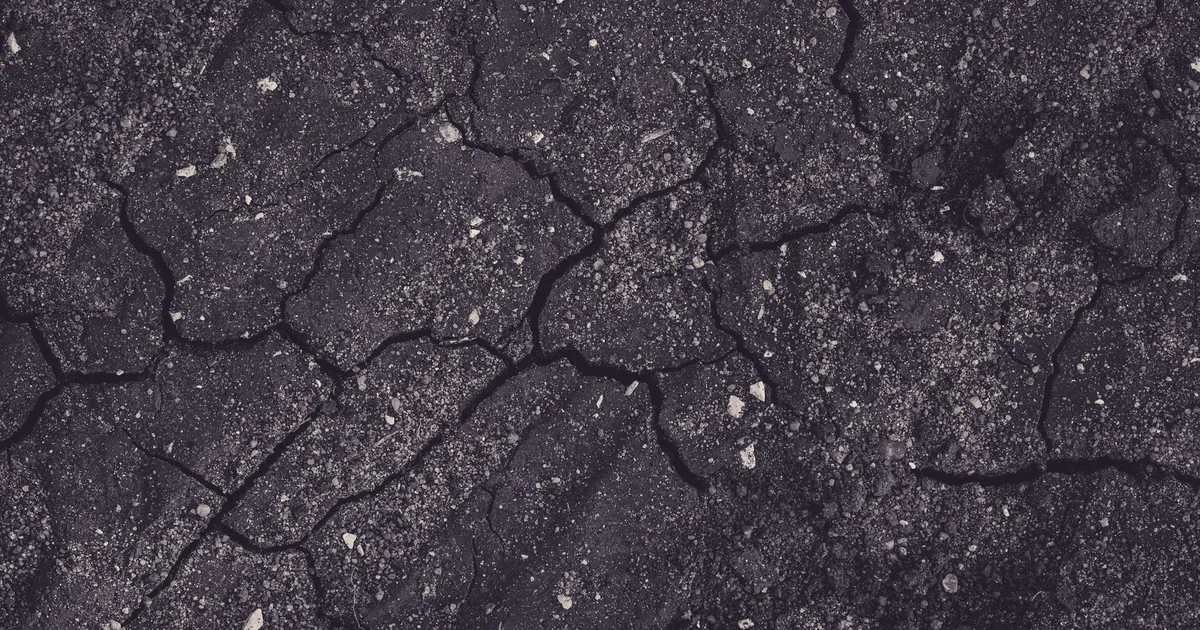
Clay shrink-swell subsidence is a complex geotechnical phenomenon, though its underlying principle is fairly simple to grasp. Clay soils react strongly to changes in their water content. During intense drought, water evaporates and the soil dries out, causing a 'shrinkage' or consolidation effect. The soil contracts, cracks, and its bearing capacity decreases.
Conversely, during rainy periods or soil rehydration (for example, after a long drought), the clay reabsorbs water and increases in volume, causing 'swelling'. These alternating shrink-swell movements place significant, cyclical stress on building foundations — especially shallow foundations, which are not deep enough to escape this active soil zone. Trees near homes can also worsen the phenomenon by drawing moisture from the soil.
The consequences are visible and often severe: cracks appearing on facades, slabs, and interior partitions, warped floors, and misaligned door and window frames. This damage can affect the very structure of the house, compromising its stability and value. Climate change, with more frequent and intense prolonged droughts, only heightens this risk, turning once-exceptional events into an almost annual threat for many French regions.
The heavy consequences for homeowners and national solidarity
Beyond the figures, the prevalence of RGA in Cat-Nat claims translates into human and financial hardship for thousands of households. Cracks running through a house are not just an aesthetic issue; they are the sign of potentially serious structural damage that can render a home uninhabitable and cause a significant loss in its value. Rebuilding or repairing can prove extremely costly, often out of reach for homeowners who are uncompensated or under-compensated.
The path to obtaining natural disaster recognition is itself fraught with obstacles. Homeowners must wait for an interministerial decree, prove the drought conditions, and then demonstrate the adequate causal link between the event and the damage suffered. The surge in RGA claims puts unprecedented pressure on the Cat-Nat scheme, which was designed for unpredictable events, not a recurring disaster. This strain shows up as longer processing times and, too often, compensation refusals, leaving homeowners without recourse (as our article 'Drought and Cat-Nat: in reality, only 1 in 4 victims is compensated' points out).
This weakening of the national solidarity scheme, highlighted by reports such as that of the Court of Auditors (discussed in 'Court of Auditors report: one step closer to the end of the Cat-Nat scheme for RGA?'), raises questions about the future insurability of homes in clay-soil areas. For homeowners, it is becoming crucial to move beyond merely reacting to damage and instead adopt a proactive approach to prevention and monitoring to protect their property.
Anticipating and managing the risk: the evolution of prevention strategies
Faced with an RGA risk now identified as the top source of claims, strategy can no longer be limited to curative repairs alone. While underpinning techniques (micropiles, resin injection, concrete pads) remain proven solutions for stabilizing a building that has already suffered significant structural damage, they are costly, heavy, and come into play only after the damage is done. The urgent priority is prevention, monitoring, and proactive risk management.
Modern approaches now aim to act upstream, tackling the very cause of the phenomenon: variations in soil moisture. The goal is to maintain a stable water balance around the foundations, minimizing the shrink-swell movements of the clay. This requires a better understanding of soil behavior, continuous monitoring of its parameters (moisture, temperature), and the adoption of solutions that regulate its water content.
This shift in mindset and technique opens the way to more sustainable, less invasive, and more economically viable long-term solutions. The goal is to reduce building vulnerability to repeated climate hazards, preserve the property value of homes, and provide homeowners with greater peace of mind. Environmental data is becoming a major asset in this preventive approach.
The connection with TerraStab
Given this reality of a major, recurring risk, prevention stands out as the most relevant strategy. This is the context in which innovative soil moisture regulation approaches, also known as hydro-stabilization, such as the one offered by TerraStab, take on their full meaning. Rather than waiting for significant damage to appear and undertaking costly underpinning work, TerraStab aims to maintain more stable water conditions in the clay soil around the foundations. Thanks to a network of buried sensors continuously measuring moisture, temperature, and water tension, along with a predictive hydrogeotechnical model, the system can anticipate a water imbalance 7 to 15 days in advance. An underground irrigation network then activates to readjust soil moisture, limiting the occurrence of significant damage. This prevention approach, based on soil observation, contributes to better RGA risk management and is particularly well suited to shallow foundations. A stable home can contribute to peace of mind and to protecting property value against climate hazards.
Is your home in a clay area?
Enter your address and get your RGA risk level in 2 minutes — official BRGM data.
Learn more
- →Drought and Cat-Nat: in reality, only 1 in 4 victims is compensated
- →Court of Auditors report: one step closer to the end of the Cat-Nat scheme for RGA?
- →National solidarity against RGA is weakening — what's changing for your home
- →France 2 report: house cracks and drought — what the report doesn't tell you