
One side of the street compensated, the other not
It's the report's striking image. On one side of the same street, a town recognized as a natural disaster zone. On the other, the neighboring town is not. The result: two neighbors, two very different fates. One has repairs covered. The other absorbs the full cost of the damage alone.
This isn't an isolated case. Natural disaster recognition is granted town by town, based on strict meteorological criteria. One town can be recognized for a given drought episode while its neighbor, exposed to the same clay soil, is not — because water-level readings don't cross the regulatory threshold.
For the homeowners affected, this logic is incomprehensible. And often unfair.
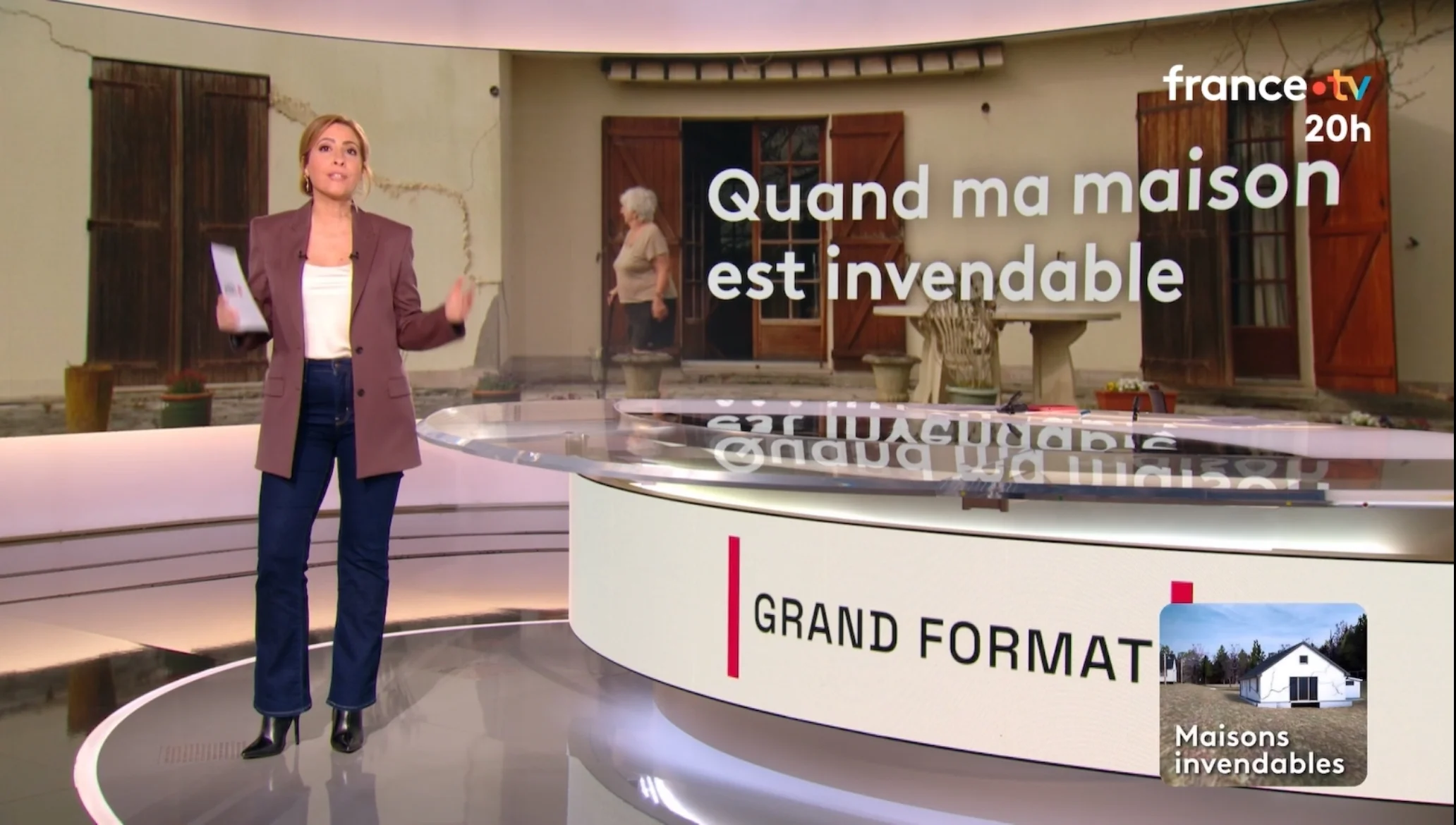
€300,000 in repairs, a retiree, and shutters that no longer open
The report features a retiree whose home is in a town that was not recognized. She lives in the dark: the shutters no longer open. The cracks have warped the frames. The quote to repair the structure? Over €300,000.
Nearby, another retiree was fortunate enough to get Cat-Nat recognition. The major structural work was covered. But all the cosmetic work — redoing the facade, repointing, repainting — remains her responsibility. Still another €40,000 out of pocket.
Insurance covers the structural work. Not what's visible. Something homeowners often discover only after the fact.
An unsellable home, a collapsing value
The report makes it clear: a cracked home is a home whose value plummets. In one case shown, a property listed at €150,000 was negotiated down to €100,000. The buyer believes she got a bargain.
What the report doesn't say: buying a cracked home at a discount without addressing the cause of the cracks is buying a deferred problem. Filling in cracks without stabilizing the soil means redoing the work with every drought. At the next major dry spell — and they're intensifying — the same damage will return. And the bill could run between €70,000 and €120,000.
A cracked home isn't a "cheap" home. It's a home whose real cost is invisible at the time of signing — and often revealed at the next drought.
Addressing the cause, not just the consequences
Clay shrink-swell subsidence is a physical phenomenon: the soil dries out, shrinks, and the foundations move. Filling in cracks changes nothing about this mechanism. It starts again at the next drought.
What TerraStab proposes is to act upstream: maintaining stable soil moisture using connected sensors and a subsurface irrigation system. The result: shrink-swell cycles are limited, foundations stop moving, and cracks don't reappear.
This approach is non-invasive, requires no major works, and is accessible well before reaching the €300,000 shown in the report. To understand how clay shrink-swell subsidence works and what solutions exist, check out our complete guide.
Key takeaways
The Cat-Nat system creates absurd inequalities between neighboring towns. Even with Cat-Nat recognition, part of the repair costs remains the homeowner's responsibility. Buying a "cheap" cracked home without addressing the soil is only deferring the problem. Preventive solutions exist — before reaching major repair work.
Is your home exposed?
Check for free in 30 seconds with our analysis tool based on official 2026 national RGA data.